I am a Kentucky based USDA Mortgage Lender that has originated over 300 KY Rural Housing Mortgage Loans in Kentucky-CALL OR TEXT 502-905-3708 FOR USDA MORTGAGE LOAN
Homebuyer Benefits for Kentucky Rural Housing Lenders
• No down payment required.
• Buy existing, build new, or refinance current Rural Development loan.
• Finance eligible loan costs up to 100% of the appraised value plus the one-time
upfront guarantee fee.
• Eligible loan costs may include: purchase price, repairs, lenders fees, closing costs,
essential household equipment.
• 30-year fixed rate that is negotiated between the applicant and lender.
• No maximum purchase price limits.
• Gift and grant funds allowed.
• Normal purchase contract time.
Why is the Single Family Housing Guaranteed Loan Program a top financing option for homebuyers?
USDA loans offer many advantages such as…
• No down payment so they can keep reserves in the bank for future unexpected costs.
• USDA offers the option to buy existing, build new, or refinance a current Rural Development
loan.
• Borrowers can finance eligible loan costs up to 100% of the appraised value plus the one-time
upfront guarantee fee.
• Eligible loan costs may include: purchase price, repairs, lenders fees, closing costs, essential
household equipment.
• 30-year fixed rate that is negotiated between the applicant and lender.
• No maximum purchase price limits. Maximum loan amount is determined solely by the
applicant’s repayment ability.
• Gift and grant funds allowed.
• Normal purchase contract time. No need to extend the contract time. Rural Development
typically issues a Conditional Commitment to the lender within 2-3 business days of receiving a complete application
The view and opinions stated on this website belong solely to the authors, and are intended for informational purposes only. The posted information does not guarantee approval, nor does it comprise full underwriting guidelines. This does not represent being part of a government agency. The views expressed on this post are mine and do not necessarily reflect the view of my employer. Not all products or services mentioned on this site may fit all people.
Getting Approved for a Kentucky USDA Loan after bankruptcy, foreclosure, or short sale.
The Kentucky USDA Rural Loan program requires a minimum of three years from the date of a bankruptcy, foreclosure, or short sale to the borrower being eligible for a USDA Loan.
If the bankruptcy included a property, whether a primary residence or investment property, the earliest a new loan can be obtained is based on USDA Loan short sale and foreclosure guidelines.
When the borrower experienced either a short sale, foreclosure, or surrenders the property through the bankruptcy process, there will be a three year waiting period between the date of property transfer from the borrower to a new entity, and the date the new loan application can be processed.
The most conservative stance by a Kentucky USDA Loan Underwriter for defining the date of the negative occurrence is the legal recorded transfer date, which is the date the property has been transferred out of the borrowers name and either back to the bank that holds the mortgage note or a subsequent home buyer. From this date the borrower will not be eligible for a USDA Loan for a period of time no less than three years.
However, one of my investors will allow a Chapter 7 bankruptcy discharge date to be considered the date of foreclosure, provided the borrower didn’t re-affirm the mortgage liability. This differs from when the property transfer date is recorded at the County Clerks Office. This is especially helpful in circumstances where the home owner legally removed their ownership rights to a property, through a Chapter 7 bankruptcy, but the mortgage lien holder was slow to transfer the mortgage back into the name of the bank or sell the property.
If the foreclosed property was secured by a government backed mortgage loan such as a FHA or VA Loan, the property transfer date is no longer considered relevant. The date that now becomes important is the date when the mortgage lender that held the mortgage note received compensation for their mortgage insurance claim through either The Department of Housing and Urban Development for a FHA Loan or The Veterans Administration for a VA Loan.
If you have yet to apply for your Kentucky USDA Loan pre-qualification request, you can do so online by clicking here. If you have any Kentukcy USDA Loan or other loan specific questions please, email me at kentuckyloan@gmail.com or text/call 502-905-3708
Foreclosure and Bankruptcy Guidelines for Kentucky Rural Housing Loans
Foreclosure within 3 years:
Including pre-foreclosure activity, such as a pre-foreclosure sale or short sale
in the previous 3 years (refer to Attachment 10-B for additional guidance);
Bankruptcy within 3 years:
Chapter 7 bankruptcy discharged in the previous 3 years;
An elapsed period of less than 3 years, but not less than 12 months, may
be acceptable if the applicant meets the criteria of Section 10.8 of this
Chapter.
Chapter 13 bankruptcy that has yet to complete repayment (repayment plan in
progress) or has completed payment in the most recent 12 months.
Plans that are completed for 12 months or greater do not require a credit
exception in accordance with Section 10.8;
Late mortgage payments if any mortgage trade line during the most recent 12
months shows 1 or more late payments of greater than 30 days
Collections Accounts for Rural Housing Loans in Kentucky
.
In an effort to minimize future risk of open collections left unpaid, the lender will
consider the following during the capacity analysis of the loan request, regardless of the
method utilized to underwrite:
1) Determine if the total outstanding balance of all collections accounts of all
applicants is equal to or greater than $2,000. Unless excluded by state law,
collection accounts of a non-purchasing spouse in a community property state are
included in the cumulative balance of all collections.
2) Remove all medical collections and all types of charge off accounts from the total
balance. Medical collections and charge off accounts must be clearly identifiable
on the credit report.
3) If the remaining outstanding balance of collection accounts are equal to or greater
than $2,000, any of the following actions will apply:
a. Payment in full of all collection accounts at or prior to closing.
b. Payment arrangements are made with each creditor for each collection
account remaining outstanding. A letter from the creditor or evidence on
the credit report is required to validate the payment arrangements. The
agreed upon monthly payment for each outstanding collection account
will be included in the borrower’s debt-to-income ratio.
c. In the absence of a payment arrangement, the lender will utilize in the
debt-to-income ratio a calculated monthly payment. For each collection
utilize 5% of the outstanding balance to represent the monthly payment.
The view and opinions stated on this website belong solely to the authors, and are intended for informational purposes only. The posted information does not guarantee approval, nor does it comprise full underwriting guidelines. This does not represent being part of a government agency. The views expressed on this post are mine and do not necessarily reflect the view of my employer. Not all products or services mentioned on this site may fit all people. NMLS ID# 57916, (www.nmlsconsumeraccess.org). USDA Mortgage loans only offered in Kentucky.
All loans and lines are subject to credit approval, verification, and collateral evaluation and are originated by lender. Products and interest rates are subject to change without notice. Manufactured and mobile homes are not eligible as collateral.
Here are a few reminders about the Kentucky USDA Rural Housing Service (RHS) Section 502 Guaranteed program which provides very-low-, low- and moderate-income rural residents access to affordable housing finance options with little or no down payment or out-of-pocket costs.
• Eligibility Link – Access the USDA Home page, click here.
• Income – To determine eligibility of an applicant/household, click here.
• Property Eligibility – To determine whether the property is located in a designated rural area, click here.s
30 year fixed rate loan terms only, Purchase or refinance, If refinancing must be existing USDA home loan. No cash out allowed.
• Occupancy – Owner occupied only.
• Maximum Loan Amount-No max loan amount
• Max DTI – GUS approved, generally 45% (front end sensitive)/ Manual 29/41.
• Guaranty Fee/Annual Fee – there is a 1.00%/ 0.35% (monthly).
• Down Payment – Down payment not required but if any cash to close, must be borrowers own funds. Gifts are not allowed.
• Interested Third Party Contributions – An amount of 6% of the sales price can be contributed towards closing costs.
.
If you meet income eligibility requirements and are looking to settle in a rural area, you might qualify for the KY USDA Rural Housing program. The program guarantees qualifying loans, reducing lenders’ risk and encouraging them to offer buyers 100% loans. That means Kentucky home buyers don’t have to put any money down, and even the “upfront fee” (a closing cost for this type of loan) can be rolled into the financing.
Fico scores usually wanted for this program center around 620 range, with most lenders wanting a 640 score so they can obtain an automated approval through GUS. GUS stands for the Guaranteed Underwriting system, and it will dictate your max loan pre-approval based on your income, credit scores, debt to income ratio and assets.
CREDIT SCORES UNDERWRITING USDA MORTGAGE FOR RURAL HOUSING
This attachment illustrates the approach to reviewing credit history when a loan is
manually underwritten by an approved lender. Credit score over 680: Perform a basic level of underwriting to confirm the
applicant has an acceptable credit reputation. Perform additional analysis if the
applicant’s credit history has indicators of unacceptable credit as noted in Paragraph 10.7 of this Chapter. Credit score 679 to 640: Perform a comprehensive level of underwriting.
Underwrite all aspects of the applicant’s credit history to establish the applicant has an
acceptable credit reputation. Credit scores in this range indicate the applicant’s
reputation is uncertain and will require a thorough analysis by the underwriter of the
credit to draw a logical conclusion about the applicant’s commitment to making
payments on the new mortgage obligation. The applicant’s credit history should
demonstrate his or her past willingness and ability to meet credit obligations. Credit score less than 640: Perform a cautious level of underwriting. Perform a
detailed review of all aspects of the applicant’s credit history to establish the applicant’s
willingness to repay and ability to manage obligations as agreed. Unless there are
extenuating circumstances documented in accordance with this Chapter, a credit score in this range is generally viewed as a strong indication that the applicant does not have an acceptable credit reputation. Little or no credit history: The lack of credit history on the credit report may be
mitigated if the applicant can document a willingness to pay recurring debts through
other acceptable means such as third party verifications or cancelled checks. Due to
impartiality issues, third party verifications from relatives of household members are not
permissible. Lenders can develop a Non-Traditional Credit Report for applicants who
do not have a credit score in accordance with Paragraph 10.6 of this Chapter.
An applicant with an outstanding judgment obtained by the United States in a
Federal court, other than the United States Tax Court, is not eligible for a guarantee
unless otherwise stated in this Chapter.They also allow for a manual underwrite, which states that the max house payment ratios are set at 29% and 41% respectively of your income.
See link here for more detailed guidelines for credit score, disputed accounts, foreclosures, trade line requirements bankruptcies below:
Indicators of unacceptable credit. The following indicators require documentation
meeting the criteria of Section 10.8 to approve an applicant’s loan request for manually
underwritten loans: Foreclosure and Bankruptcy Guidelines
Foreclosure within 3 years:
Including pre-foreclosure activity, such as a pre-foreclosure sale or short sale
in the previous 3 years (refer to Attachment 10-B for additional guidance);
Bankruptcy within 3 years:
Chapter 7 bankruptcy discharged in the previous 3 years;
An elapsed period of less than 3 years, but not less than 12 months, may
be acceptable if the applicant meets the criteria of Section 10.8 of this
Chapter.
Chapter 13 bankruptcy that has yet to complete repayment (repayment plan in
progress) or has completed payment in the most recent 12 months.
Plans that are completed for 12 months or greater do not require a credit
exception in accordance with Section 10.8;
Late mortgage payments if any mortgage trade line during the most recent 12
months shows 1 or more late payments of greater than 30 days
Collections Accounts
.
In an effort to minimize future risk of open collections left unpaid, the lender will
consider the following during the capacity analysis of the loan request, regardless of the
method utilized to underwrite:
1) Determine if the total outstanding balance of all collections accounts of all
applicants is equal to or greater than $2,000. Unless excluded by state law,
collection accounts of a non-purchasing spouse in a community property state are
included in the cumulative balance of all collections.
2) Remove all medical collections and all types of charge off accounts from the total
balance. Medical collections and charge off accounts must be clearly identifiable
on the credit report.
3) If the remaining outstanding balance of collection accounts are equal to or greater
than $2,000, any of the following actions will apply:
a. Payment in full of all collection accounts at or prior to closing.
b. Payment arrangements are made with each creditor for each collection
account remaining outstanding. A letter from the creditor or evidence on
the credit report is required to validate the payment arrangements. The
agreed upon monthly payment for each outstanding collection account
will be included in the borrower’s debt-to-income ratio.
c. In the absence of a payment arrangement, the lender will utilize in the
debt-to-income ratio a calculated monthly payment. For each collection
utilize 5% of the outstanding balance to represent the monthly payment.
They loan requires no down payment, and the current mortgage insurance is 1% upfront, called a funding fee, and .35% annually for the monthly mi payment. Since they recently reduced their mi requirements, USDA is one of the best options out there for home buyers looking to buy in a rural area.
A rural area typically will be any area outside the major cities of Louisville, Lexington, Paducah, Bowling Green, Richmond, Frankfort, and parts of Northern Kentucky.
There is also a max household income limits with most cutoff starting at $87,000 for a family of four, and up to $115,000 for a family of five or more.
Kentucky FHA, VA, USDA & Rural Housing, KHC and Fannie Mae mortgage loans.
Disclaimer: No statement on this site is a commitment to make a loan. Loans are subject to borrower qualifications, including income, property evaluation, sufficient equity in the home to meet Loan-to-Value requirements, and final credit approval. Approvals are subject to underwriting guidelines, interest rates, and program guidelines and are subject to change without notice based on applicant’s eligibility and market conditions. Refinancing an existing loan may result in total finance charges being higher over the life of a loan. Reduction in payments may reflect a longer loan term. Terms of any loan may be subject to payment of points and fees by the applicant Equal Opportunity Lender. NMLS#57916http://www.nmlsconsumeraccess.org/
— Some products and services may not be available in all states. Credit and collateral are subject to approval. Terms and conditions apply. This is not a commitment to lend. Programs, rates, terms and conditions are subject to change without notice. The content in this marketing advertisement has not been approved, reviewed, sponsored or endorsed by any department or government agency. Rates are subject to change and are subject to borrower(s) qualification.
Kentucky USDA Rural Development Guaranteed Lending Program is geared to assist low to moderate income families realize home ownership. Below are some important highlights:
USDA/Rural Development. The Annual Guarantee Fee is set to INCREASE October 1.
Debt Ratios–29/41% on manual underwrites – max to 45% Debt to Income ratios with GUS Approve/Eligible Finding.
ZERO down payment – 100% LTV ok
Income Eligibility Limits do apply. Usually to $90k for a family of four and up to $119k for a household family of five or more.
Lender Credit from the interest rate may be used to pay closing costs.
Gifts ok! Usually not needed for USDA loans because 100% Financing offered. Gift funds cannot be used for reserves to get a GUS approval.
Applicants with > 20% of the sales price in assets (exclude retirement accounts) are not eligible for USDA financing.
Clear CAIVRS required – CAIVRS is a Federal Government-wide data base of information regarding individuals where an insurance claim or guarantee loss was paid.
Student Loan Payments –
Effective immediately for all RHS loans, student loan calculations will be changed to the following
Fixed Payment Loans: A permanent amortized, fixed payment may be used when it can be documented that the payment is fixed, the interest rate is fixed, and the repayment term is fixed.
Non-Fixed Payment Loans (i.e. deferred, income based, graduated, adjustable, etc.): The payment should be calculated as the greater of 0.5% of the loan balance or the actual payment reflected on the credit report. No additional documentation is required.
One borrower must have 3 tradelines that have existed for 12 months. If this requirement cannot be met, an accept decision must be downgraded to a refer and treated as a manual underwrite.
VERIFICATION OF RENT:
Scores 680 and above OR GUS accept = No VOR required.
Scores 679 and below = VOR required.
COLLECTIONS:
Determine if the total outstanding balance of all collections accounts and charge offs of all applicants is equal to or greater than $2,000. Unless excluded by state law, collection accounts and charge offs of a non-purchasing spouse in a community property state are included in the cumulative balance of all collections and charge offs.
Remove all medical collections and medical charge off accounts from the total balance. Medical collections and medical charge off accounts must be clearly identifiable on the credit report.
If the remaining outstanding balance of collection accounts and charge offs are equal to or greater than $2,000, any of the following actions will apply:
Payment in full of all collection accounts and charge offs at or prior to closing.
Payment arrangements are made with each creditor for each collection account and charge offs remaining outstanding. A letter from the creditor or evidence on the credit report is required to validate the payment arrangements. The agreed upon monthly payment for each outstanding collection account and charge off will be included in the borrower’s debt-to-income ratio.
In the absence of a payment arrangement, the lender will utilize in the debt-to-income ratio a calculated monthly payment. For each collection and charge off utilize 5% of the outstanding balance to represent the monthly payment.


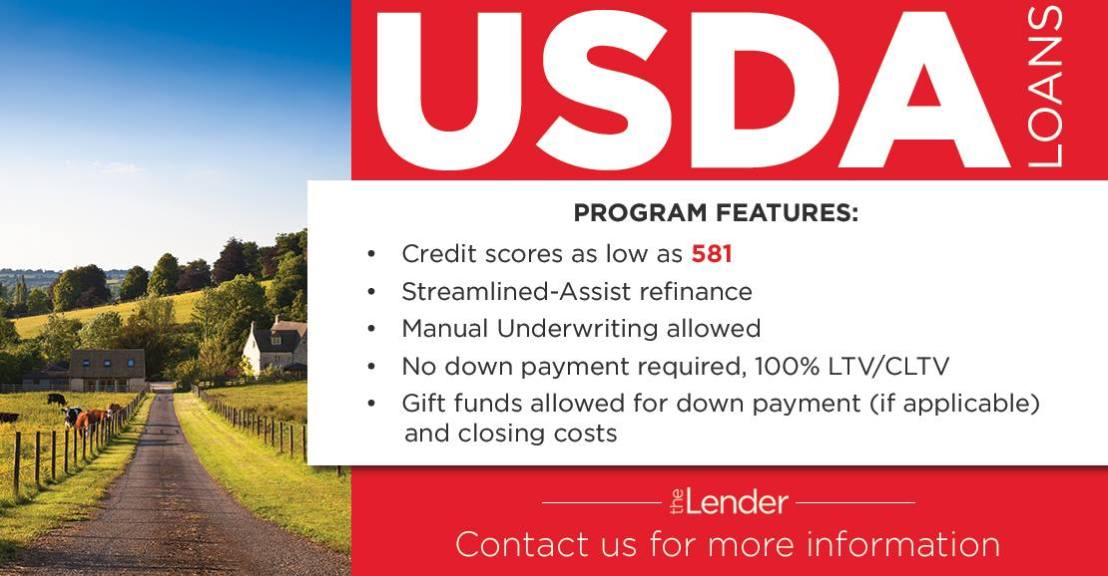






 Kentucky USDA Mortgage Lender for Rural Housing Loans