
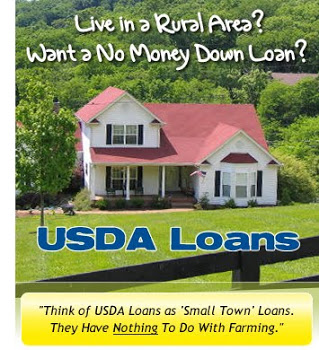
Tag: USDA Rural Development

Kentucky Mortgage USDA Loans Zero Down Home Loans Still Exist


Kentucky Mortgage Usda Loan Zero Down Home Loans Still Exist


Your income and your monthly expenses. Standard debt-to-income ratios are 29/41 for USDA Loans. These ratios may be exceeded with compensation factors.

Your credit history (this is important, but USDAs credit standards are flexible). A FICO score of 620 or above is required for all loans

Your overall pattern rather than to individual problems you may have had.

To be eligible for an USDA mortgage, your monthly housing costs (mortgage principal and interest, property taxes and insurance) must meet a specified percentage of your gross monthly income (29% ratio). Your credit background will be fairly considered. At least a 620 FICO credit score is required to obtain an USDA approval through Lending. You must also have enough income to pay your housing costs plus all additional monthly debt (41% ratio). These percentages may be exceeded with compensating factors. Applicants for loans may have an income of up to 115% of the median income for the area. Maximum USDA Loan income limits for your area can be found at here. Families must be without adequate housing, but be able to afford the mortgage payments, including taxes and insurance.


Can I get an USDA Mortgage Loan after bankruptcy?

Criteria for USDA loan approvals state that if you have been discharged from a Chapter 7 bankruptcy for three years or more, you are eligible to apply for an USDA mortgage. If you are in a Chapter 13 bankruptcy and have made all court approved payments on time and as agreed for at least one year, you are also eligible to make an Kentucky USDA loan application.


What are the USDA Down Payment Requirements?

USDA Mortgages have no down payment requirement. 


What is the maximum amount that I can borrow?

The maximum amount for an Kentucky USDA Mortgage Loans are determined by:


Maximum loan amount: The is no set maximum loan amount allowed for an USDA Mortgage. Instead, your debt-to-income ratios will dictate how much home your can afford (29/41 ratios). Additionally, your total household monthly income must be within USDA allowed maximum income limits for your area. Maximum USDA Loan income limits for your area can be found at here.


Maximum financing: The maximum USDA Mortgage amount will be 100% of the appraised value of the home.


What kinds of loans does USDA offer?


Fixed rate loans – All USDA loans are fixed-rate mortgages. In a fixed rate mortgage, your interest rate stays the same during the whole loan period, normally 30 years. The advantage of a fixed-rate mortgage is that you always know exactly how much your monthly payment will be, and you can plan for it.


What is Considered a Rural Area by the USDA?

Rural areas include open country and places with population of 10,000 or less andunder certain conditionstowns and cities. There is an automated rural area eligibility calculator at:http://eligibility.sc.egov.usda.gov.


Kentucky USDA Loans

What are USDA Home Loans?

USDA stands for United States Department of Agriculture. A USDA Mortgage provides a low-cost insured home mortgage loan that suits a variety of options. A USDA mortgage is likely the best home loan option if you want to purchase a home with no down payment. If youre unsure about your credit rating, or have concerns about a down payment when youre doing a home loan comparison, ENG Lendings USDA Rural Mortgage Loans can give you piece of mind with zero-down, super low closing costs and no monthly mortgage insurance.


What Types of Loans does USDA offer in Kentucky?

Currently, there are two kinds of USDA Home Loans available in Kentucky for single family households:


USDA Guaranteed Rural Housing Loans

USDA Guaranteed Home Mortgage Loans are the most common type of USDA Loanin Kentucky and allow for higher income limits and 100% financing for home purchases. USDA Guaranteed Loan applicants may have an income of up to 115% of the median household income for the area. Area income limits for this program can be viewed here. All USDA Guaranteed Loans carry 30 year terms and are set at a fixed rate.


USDA Direct Rural Housing Loans

USDA Direct Housing Loans are less common than USDA Guaranteed Loans and are only available for low and very low income households to obtain homeownership, as defined by the USDA. Very low income is defined as below 50 percent of the area median income (AMI); low income is between 50 and 80 percent of AMI; moderate income is 80 to 100 percent of AMI. Click here to see area income limits for this program.

What factors determine if I am eligible for a USDA Loan in Kentucky?

To be eligible for A USDA Rural Loan in Kentucky, your monthly housing costs (mortgage principal and interest, property taxes, and insurance) must meet a specified percentage of your gross monthly income (29% ratio). Your credit background will be fairly considered. A 620 FICO credit score is required to obtain a USDA Rural Housing Loan approval through ENG Lending. You must also have enough income to pay your housing costs plus all additional monthly debt (41% ratio). These ratios can be exceeded somewhat with compensating factors. Applicants for loans may have an income of up to 115% of the median income for the area. Maximum USDA Guaranteed Loan income limits for your area can be found at here. Maximum USDA Direct Loan income limits for your area can be found at here. Families must be without adequate housing, but be able to afford the mortgage payments, including taxes and insurance.


What is the maximum amount that I can borrow?

The maximum amount for an USDA home loan is determined by:

Maximum Loan Amount: The is no set maximum loan amount allowed for USDA Rural Home Loans. Instead, your debt-to-income ratios will dictate how much home your can afford (29/41 ratios). Additionally, your total household monthly income must be within USDA allowed maximum income limits for your area. Maximum USDA Guaranteed Loan income limits for your area can be found at here.


Maximum financing: The maximum USDA Rural Development Loan amount is 102% of the appraised value of the home (100% plus the 2% USDA RD Loan guarantee fee).

Kentucky Mortgage Usda Loan Zero Down Home Loans Still Exist


How much money will I need for the down payment and closing costs?

USDA Rural Development Mortgage Loans require no down payment and they allow for the closing costs to be included in the loan amount (appraisal permitting).


What property types are allowed for USDA Rural Loan Mortgages?

While USDA Mortgage Guidelines do require that the property be Owner Occupied (OO), they do allow you to purchase condos, planned unit developments, manufactured homes, and single family residences.

Additional offers from other lenders.


Kentucky USDA Loan Adjusted Maximum Income Limits by County

everything You Need To Know About USDA-Rural Home Loans


I have put together valuable information and tools to help you gather all of the information that you need to make the most informed decision when shopping for a mortgage. Sometimes the USDA Home Loan Program is not the best option for a Zero Down Purchase. .


Sometimes good credit and a down payment are not enough to qualify for a home loan at a commercial lending institution, such as a bank, savings and loan or with a mortgage broker. That is why the U.S. Department of Housing and Urban Development has provided a loan program that allows more rural families and individuals to be eligible to become homeowners with the help of a USDA guaranteed home loan. The USDA loan program allows:

– 620 min credit score

– Up to 6% seller contributions

– No PMI (private mortgage insurance)

– Zero Down


However, the USDA-RD loan program DOES have 2 main qualifying features:

(1) Eligibility is region or location specific CLICK HERE http://eligibility.sc.egov.usda.gov/eligibility/welcomeAction.do?pageAction=sfp&NavKey=property@11 to check if an address is USDA Eligible.

(2) Eligibility is income specific. Qualifying income is based on household members and a max income cap. CLICK HERE http://eligibility.sc.egov.usda.gov/eligibility/incomeEligibilityAction.do?pageAction=state&NavKey=income@11 to see if you qualify under the max income cap.

J

KENTUCKY HOUSING CORPORATION


KENTUCKY HOUSING CORPORATION.

via KENTUCKY HOUSING CORPORATION.

6 Things You Should Know When Getting a Mortgage Loan – NewsChannel5.com | Nashville News, Weather & Sports


6 Things You Should Know When Getting a Mortgage Loan – NewsChannel5.com | Nashville News, Weather & Sports.

via 6 Things You Should Know When Getting a Mortgage Loan – NewsChannel5.com | Nashville News, Weather & Sports.

Ky Rural Housing and USDA Loans Guidelines


Ky Rural Housing and USDA Loans Guidelines

USDA/Rural Housing 0 Down

Kentucky Single Family Housing Guaranteed Loan Program

Kentucky Single Family Housing Guaranteed Loan Program 
– 25 Frequently Asked Questions

25 Questions and  Answers

1 What is the guarantee?
USDA Rural Development provides the full faith and assurance of the U.S Government
that any financial loss resulting from servicing the loan will be reimbursed in full up to
an amount not exceeding 90% of the original loan amount. All loss up to an amount not
exceeding 35% of the original loan is fully reimbursed. Losses exceeding 35% are 85%
reimbursed.
2 What is the advantage to the customer?
100 percent financing, fixed interest rate, no MIP/PMI, and no restrictions on size or
design are just a few of the advantages.
3 What are the eligibility requirements?
Have adequate and dependable income (up to 115 percent of adjusted area median
income), have acceptable credit, do not own a dwelling in the local commuting area, US
Citizen or permanent resident, have the ability to personally occupy the home on a
permanent basis, and do not have funds for a 20% down payment loan plus closing and
moving expenses.
4 Can a Broker originate Guaranteed loans? Yes, however only Approved lenders may underwrite & submit loans.
5 How long does it take to get an answer?
Our goal is a 2 to 5 day turnaround. Time will be longer in some offices due to the large
number of guarantee requests received.
6 What is the maximum fixed Interest Rate  and term?
Fannie Mae 90 day delivery rate plus 60 basis points rounded up to nearest quarter of
one percent Or no more than the Lender’s published VA rate for first mortgage loans
with no discount points. The term is 30 years.
7 What is the maximum loan amount? The Loan amount is limited by the market value and repayment ability.
8 What is the maximum Loan to ValueIt can be up to 100% LTV plus the Agency guarantee fee.
9 What is the Guarantee Fee? The guarantee fee is 3.5 percent of the “Total” loan amount.
10 What are the qualifying ratios? PITI Ratio 29 percent, TD Ratio 41 percent.
Higher ratios may be approved with compensating factors.
11 Do we show deferred student loans in the debt ratio?
Deferred student loans should be included in the debt ratio calculations for Guaranteed
Loans regardless of the deferment period.
12 What is the minimum credit score?
Under certain criteria, credit score 640 and above no comment required.
For credit score 639 and below document circumstances were temporary in nature
beyond the applicants control and have been removed. In most cases, loans will not be
guaranteed for applicants who have a middle credit score of 580 & below.
13 What about location? The dwelling must be located in eligible rural area (See eligibility site)
http://eligibility.sc.egov.usda.gov/eligibility/welcomeAction.do
14 What about refinancing? Limited to existing USDA Rural Development guaranteed or direct loans.
15 Can loans include acreage?
Possibly. The acreage must not contain any income producing facilities and the value of
acreage may not exceed 30% of the total property value.
16 Can Manufactured Homes be financed? Yes, however they must be new and sold by an approved dealer contractor.
17 What about an in-ground swimming pool? Waivers may be granted (on a case by case basis)
18 What are the required inspections?
Property must meet HUD Handbook 4905.1 & 4150.2 or similar standard. A FHA
roster appraiser can verify adequacy/working order of electrical, plumbing, heating,
water & waste disposal on existing dwellings.
19 Will USDA Rural Development issue a letter asking the Approved Lender to make
a loan? No. This is the Approved Lender‟s loan. They underwrite the loan and decide if it meets
their standards and Agency standards before submitting.
20 Is homebuyer education required? Homebuyer education is not required, however it is recommended.
21 Are seller concessions allowed? Yes. Rural Development does not restrict the amount of seller concessions.
22 Who approves the Appraiser? The appraiser must be licensed by the State to complete appraisals.
23 Can necessary repairs be included in loan? Yes. An „as improved‟ appraisal will be needed to include cost of repairs.
24 Are alternate verifying income documents allowed?
Yes. Paycheck stubs, payroll earnings statements and W-2 tax forms for previous 2 tax
years, and telephone verification of employment.
25 Who buys Guaranteed Housing Loans? JP Morgan , FHLB, Fannie Mae, Ginnie Mae, and other

Joel Lobb (NMLS#57916)Senior  Loan Officer
502-905-3708 cell
502-813-2795 fax
jlobb@keyfinllc.comKey Financial Mortgage Co. (NMLS #1800)*
107 South Hurstbourne Parkway*
Louisville, KY 40222*

Fill out my form!

HAC News: September 26, 2012 – Housing Assistance Council


HAC News: September 26, 2012 – Housing Assistance Council.

September 26,2012
Vol. 41, No. 19

SEPTEMBER 15-OCTOBER 15 IS NATIONAL HISPANIC HERITAGE MONTHproclaimed by President Obama.

CONTINUING RESOLUTION TO FUND GOVERNMENT FOR SIX MONTHS. Both the House and Senate passed H.J. Res. 117, keeping housing programs and almost all others at FY12 funding levels through March 27, 2013. President Obama is expected to sign it.

USDA DELAYS CHANGES TO RURAL DEFINITION FOR HOUSING PROGRAMS. Administrative Notice 4679 (September 25, 2012) announces that current area eligibility will remain unchanged until March 27, 2013, when the continuing resolution ends. After that date, USDA will use 2010 Census data to determine what places fit the definition of rural, unless Congress extendsgrandfathering of housing program eligibility for growing rural communities. Before Congress adjourned two new bills were introduced: S. 3541 would grandfather currently eligible places for ten years, H.R. 6416 for one year. New HAC research found that in 2011 as many as one-third of Section 502 direct loans and 40% of Section 502 guaranteed loans were made in these areas.

SEQUESTER REMAINS IN PLACE. Before adjourning Congress did not change the “sequestration” – cuts in federal funds – required in January, although a variety of bills have been introduced. The Administration’s sequestration report to Congressindicates how each agency will implement the requirement to cut 8.2% of nondefense discretionary funding, including housing programs. USDA and HUD will cut each housing program account by 8.2%. (Some program accounts encompass one program while others include several.)

FARM LABOR HOUSING APPLICATIONS NOW DUE OCTOBER 31. A notice in the Federal Register, 9/23/12, also makes other changes to the NOFA. (See HAC News, 7/25/12.) Contact an RD state office.

“DYNAMIC SERVICING STRATEGIES” NOTICE FOR USDA MULTIFAMILY PROPERTIES REISSUED. An Unnumbered Letter dated August 31, 2012 repeats instructions to RD field staff regarding prompt action on troubled multifamily properties. Contact Stephanie White, USDA, 202-720-1615.

NEW CAPITAL NEEDS ASSESSMENT GUIDANCE ISSUED FOR USDA MULTIFAMILY PROPERTIES. See Unnumbered Letter dated August 7, 2012. Contact Carlton Jarratt, USDA, 804-287-1524.

RESPA AND TILA INPUT REQUESTED. Comment by October 9 on changes the Consumer Financial Protection Bureau proposes in Real Estate Settlement Procedures Act and Truth in Lending Act regulations on mortgage loan servicing and disclosures. SeeCFPB’s web site or regulations.gov. Contact Jane Gao, CFPB, 202-435-7700.

USDA PROVIDES RESPA GUIDANCE FOR SECTION 502 DIRECT. Administrative Notice 4676 (August 27, 2012) instructs RD staff on implementation of RESPA disclosure and accuracy requirements, and on good faith estimates and the HUD-1 “Settlement Statement.” Contact Migdaliz Bernier, USDA, 202-690-3833.

HUD SEEKS NOMINATIONS FOR NAHASDA COMMITTEE. The negotiated rulemaking committee will review the Indian Housing Block Grant funding formula. Nominations are due November 19. See Federal Register, 9/18/12 or regulations.gov. Contact Rodger Boyd, HUD, 202-401-7914.

USDA DISCONTINUES RURAL ENERGY PLUS FOR 502 DIRECT. The program, which makes it easier for homebuyers to qualify for loans for energy-efficient homes, remains in effect for Section 502 guarantee borrowers. See Unnumbered Letter dated September 10, 2012. Contact Christopher Ketner, USDA, 202-690-1530. HAC has learned from RD that a replacement program will be implemented in 2013.

GAO REPORT EMPHASIZES SIMILARITIES BETWEEN USDA, FHA, AND VA GUARANTEE PROGRAMS. Housing Assistance: Opportunities Exist to Increase Collaboration and Consider Consolidation (GAO-12-554) reiterates previous findings (for example, see HAC News, 3/7/12) and adds new data. In 2009, FHA guaranteed more single-family and multifamily loans, even for low-income residents of remote rural areas, than USDA. Detailed data on income levels and other characteristics are not included in the report. GAO suggests improving an Administration task force evaluating coordination or consolidation of single-family programs and recommends the agencies identify specific programs for consolidation. Contact Mathew Sciré, GAO, 202-512-8678.

SLIGHTLY FEWER USDA TENANTS ARE COST BURDENED. USDA’s annual occupancy survey shows 2,135 fewer units and 1,254 fewer occupied units (households) in Section 515 and 514/516 properties in 2012 than 2011, as well as 1,243 more households receiving Section 521 RA, 931 fewer with rental aid from other sources, and 1,562 fewer experiencing cost burdens. Contact Janet Stouder, USDA, 202-720-9728.