How to Get a Free Credit Score for Mortgage Loan Approval
Before applying for a Kentucky mortgage loan, make sure you understand the difference between a free consumer credit score and the mortgage credit scores lenders actually use.
Key Takeaway
The credit score you see on Credit Karma, a credit card app, or a consumer credit monitoring site may not be the same score used for a mortgage approval. Most mortgage lenders review mortgage-specific credit scores when determining eligibility for FHA, VA, USDA, KHC, and conventional home loans.
3 Ways to Check Your Credit Before Applying for a Mortgage
1. Pull Your Free Credit Reports
Start by reviewing your free credit reports at AnnualCreditReport.com. Look for late payments, collections, incorrect balances, duplicate accounts, old addresses, and accounts that do not belong to you.
Remember: your free credit report usually does not include your actual mortgage credit score.
2. Use myFICO for Mortgage FICO Scores
myFICO offers access to multiple FICO score versions, including mortgage-related score models. This is usually not free, but it can help consumers see scores closer to what a mortgage lender may review.
3. Contact a Mortgage Lender or Broker
A mortgage lender or mortgage broker can pull a mortgage credit report as part of the pre-approval process.
At my office, there is no upfront out-of-pocket cost for the credit report. If your loan closes with us, the credit report fee may be collected at closing and shown on your settlement statement.
Important: Not All Credit Scores Are the Same
Free credit score apps may show VantageScore or newer consumer FICO models. Those scores can be helpful for general credit monitoring, but they may not match the mortgage middle score used for loan approval.
Example: you may see a 680 score on a free credit app, but your actual mortgage middle score could be different.
Common Mortgage Credit Score Guidelines
Loan Program
Common Minimum Score Guideline
FHA Loan
580+ for 3.5% down
VA Loan
No official VA minimum, but many lenders require 580–620+
USDA Loan
Often 620–640+ depending on lender and automated approval
Conventional Loan
Often 620+
KHC Down Payment Assistance
Usually tied to the first mortgage program and lender approval
Want to Know Your Real Mortgage Credit Score?
If you are buying a home in Kentucky, I can help review your mortgage credit profile and explain your options for FHA, VA, USDA, KHC, and conventional mortgage programs.
Joel Lobb
Mortgage Loan Officer
NMLS #57916
EVO Mortgage | Company NMLS #1738461
10602 Timberwood Cir, Ste 3, Louisville, KY 40223
Equal Housing Lender. This is not a commitment to lend. All loans are subject to credit approval, income verification, property approval, and program guidelines. Not affiliated with FHA, VA, USDA, KHC, Fannie Mae, Freddie Mac, or any government agency.
When you are ready to apply for a Kentucky mortgage loan approval to buy a house in the state of Kentucky, you will need a more accurate picture of how a mortgage lender may view your Transunion, Experian, Equifax credit reports and their scores. Scores go from 344 to 850 on each three credit bureaus and they take the middle score of the three, throwing out the highest and lowest score. Kentucky Mortgage lenders look at your credit on Equifax as well as TransUnion and Experian — all 3 bureaus.
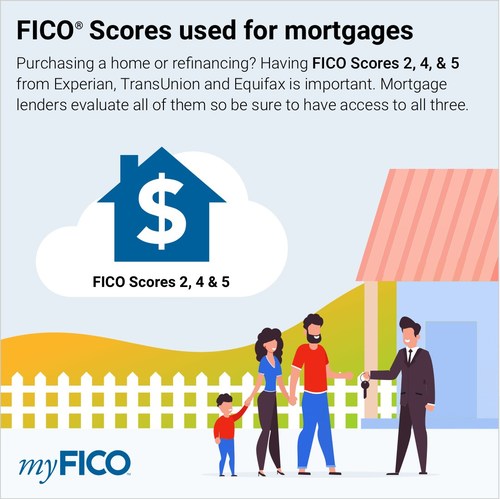
Although FICO Score version 8 is one of the latest and most predictive versions of the FICO Score, the mortgage industry generally uses the “classic” versions 5, 4 and 2 from Transunion, Equifax and Experian
If you are planning to buy a home in Kentucky, one of the first questions you should be asking is: what credit score do I need to qualify? The second question is: what credit score do I need to get the best interest rate? These are not the same question. Qualifying is one thing. Securing optimal pricing is another.
Kentucky minimum credit score requirements by loan type
Credit score alone does not determine approval. Underwriting also evaluates income stability, debt-to-income ratio, assets, employment history, and the appraisal. That said, credit score is still a critical approval gate for most programs.
FHA loan (Federal Housing Administration)
Minimum allowed by HUD: 580 for 3.5% down; 500–579 typically requires 10% down
Real-world lender requirement in Kentucky: most lenders will not go below 580; many prefer 600–620
VA loan (Veterans Affairs)
VA does not publish a minimum credit score
Real-world lender overlays: most lenders require 580–620; stronger pricing typically starts at 640+
USDA Rural Development (guaranteed)
Technically, 580 may be accepted in some cases
In practice, 640+ is commonly needed for smoother automated approval; under 640 may trigger manual underwriting
Conventional (Fannie Mae)
620 minimum
Best pricing is typically 740–760+
KHC (Kentucky Housing Corporation) with down payment assistance
620 minimum
No exceptions for most KHC DPA options
Bottom line: most realistic Kentucky approval scenarios begin at 580 for FHA/VA and 620 for Conventional/KHC. USDA is often most efficient at 640+.
Government guidelines vs lender overlays
Programs like FHA, VA, USDA, Fannie Mae, and KHC publish baseline guidelines. Lenders often add overlays (stricter rules) due to risk and secondary market requirements. This is why “on paper” minimums may not match what lenders actually approve.
How lenders calculate your qualifying credit score
Mortgage lenders pull a tri-merge credit report showing three scores from Equifax, Experian, and TransUnion. The lender discards the highest and lowest score and uses the middle score.
Example:
Equifax: 610
Experian: 629
TransUnion: 614
Your qualifying score would be 614 (the middle score).
Most lenders require at least two usable scores. Also, the score you see on consumer apps is often not the same score model used for mortgage underwriting.
What credit score typically gets the best interest rate?
Rate pricing improves as scores rise. While exact pricing varies by day, lender, and loan type, these tiers are common:
620–639: higher rates and limited pricing
640–679: improved options
680–719: strong approval tier
720–759: excellent pricing
760+: top tier pricing
If you are within 10–20 points of a better tier, improving your score before you lock can materially reduce your payment and long-term interest cost.
If your credit score is low: what to do next
Do not guess. Do not apply randomly. Also, do not dispute accounts without a plan (disputes can delay underwriting). The most effective approach is a structured credit review focused on:
reducing revolving utilization
verifying tradeline reporting accuracy
strategic payoff sequencing if needed
avoiding new inquiries and new debt
In many cases, meaningful improvement can happen in 30–60 days with the right steps.
Images from the original post
Replace the image URLs below with your WordPress Media Library URLs (or paste your existing image blocks here).
Credit score tiers for Kentucky mortgage approvalsTri-merge credit report: how the middle score is usedHow credit score ranges can affect mortgage pricing
Frequently asked questions
What is the minimum credit score to buy a home in Kentucky?
Many lenders will consider FHA/VA at 580+ and Conventional/KHC at 620+. USDA is commonly easiest at 640+ for automated approval, though exceptions may exist depending on the full file.
Does VA have a minimum credit score requirement?
VA does not publish a minimum credit score. However, most lenders use overlays and commonly require 580–620.
Why is my Credit Karma score different than my mortgage score?
Mortgage lending uses specific FICO score models. Many consumer apps show different scoring models intended for education and monitoring, not mortgage underwriting.
How do lenders pick which credit score they use?
With three bureau scores, lenders typically use the middle score (not the highest or the lowest). Most lenders also require at least two usable scores.
What score gets the best mortgage rate?
Top pricing is commonly seen at 760+ and often strong pricing begins around 740+. Exact pricing depends on the loan type, down payment, DTI, reserves, and market conditions.
The views and opinions stated on this website belong solely to the author and are intended for informational purposes only.
Posted information does not guarantee approval and does not represent full underwriting guidelines.
This does not represent being part of a government agency.
The views expressed do not necessarily reflect the view of my employer.
Not all products or services mentioned may fit all borrowers.
NMLS ID #57916 (www.nmlsconsumeraccess.org). USDA mortgage loans only offered in Kentucky.
All loans and lines are subject to credit approval, verification, and collateral evaluation and are originated by lender.
Products and interest rates are subject to change without notice.
{
“@context”: “https://schema.org”,
“@type”: “FAQPage”,
“mainEntity”: [
{
“@type”: “Question”,
“name”: “What is the minimum credit score to buy a home in Kentucky?”,
“acceptedAnswer”: {
“@type”: “Answer”,
“text”: “Many lenders will consider FHA/VA at 580+ and Conventional/KHC at 620+. USDA is commonly easiest at 640+ for automated approval, though exceptions may exist depending on the full file.”
}
},
{
“@type”: “Question”,
“name”: “Does VA have a minimum credit score requirement?”,
“acceptedAnswer”: {
“@type”: “Answer”,
“text”: “VA does not publish a minimum credit score. However, most lenders use overlays and commonly require 580–620.”
}
},
{
“@type”: “Question”,
“name”: “Why is my Credit Karma score different than my mortgage score?”,
“acceptedAnswer”: {
“@type”: “Answer”,
“text”: “Mortgage lending uses specific FICO score models. Many consumer apps show different scoring models intended for education and monitoring, not mortgage underwriting.”
}
},
{
“@type”: “Question”,
“name”: “How do lenders pick which credit score they use?”,
“acceptedAnswer”: {
“@type”: “Answer”,
“text”: “With three bureau scores, lenders typically use the middle score (not the highest or the lowest). Most lenders also require at least two usable scores.”
}
},
{
“@type”: “Question”,
“name”: “What score gets the best mortgage rate?”,
“acceptedAnswer”: {
“@type”: “Answer”,
“text”: “Top pricing is commonly seen at 760+ and often strong pricing begins around 740+. Exact pricing depends on the loan type, down payment, DTI, reserves, and market conditions.”
}
}
]
}
{
“@context”: “https://schema.org”,
“@type”: “MortgageLoan”,
“name”: “Kentucky Mortgage Loan Options: FHA, VA, USDA, Conventional, KHC”,
“description”: “Educational overview of credit score requirements and typical lender overlays for Kentucky mortgage loans, including FHA, VA, USDA, Conventional (Fannie Mae), and KHC down payment assistance options.”,
“loanType”: [“FHA”, “VA”, “USDA”, “Conventional”, “KHC”],
“areaServed”: {
“@type”: “State”,
“name”: “Kentucky”
},
“provider”: {
“@type”: “MortgageBroker”,
“name”: “Joel Lobb, Mortgage Broker FHA, VA, KHC, USDA”,
“telephone”: “+1-502-905-3708”,
“email”: “kentuckyloan@gmail.com”,
“url”: “http://mylouisvillekentuckymortgage.com/”,
“identifier”: {
“@type”: “PropertyValue”,
“name”: “NMLS”,
“value”: “57916”
}
},
“isBasedOn”: “Credit score guidance varies by program and lender overlays. Final approval depends on full underwriting including income, assets, DTI, and appraisal.”,
“disclaimer”: “Informational only. Not a commitment to lend. All loans subject to credit approval, verification, and collateral evaluation. Rates and programs subject to change.”
}