Category: Guarantee Fee and the Annual Fee for RHS loans

What Is The Mortgage Insurance Premium On A Kentucky Rural Housing USDA Loan?


When does PMI stop on Kentucky Rural Housing USDA Loans?

How Can I Get Rid of Mortgage Insurance for a Rural Housing Loan In Kentucky?

USDA’s Mortgage insurance is for the life of the loan

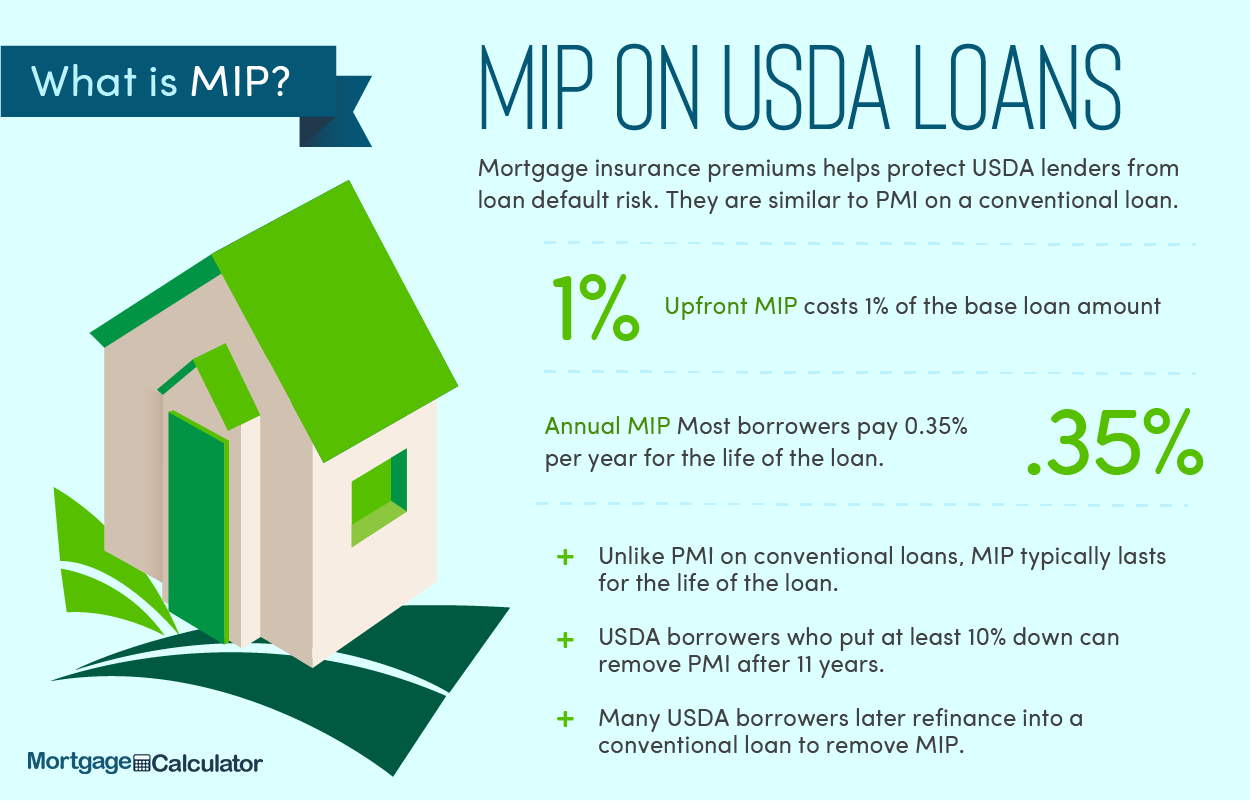
Mortgage insurance advantages & strategies for lower down payment and payment USDA has an annual fee which is similar to private monthly mortgage insurance premiums and an upfront guarantee fee paid to USDA at closing that is currently equal to 1% of the loan amount.

The annual fee is recalculated each year based on the new balance of the mortgage. The annual fee is currently only .35 which began October 1, 2016.

The annual fee percentage on USDA loans stays for the entire 30 year term but because it is based on the annual mortgage balance. Therefore, the dollar amount decreases each year.

How to calculate monthly mortgage insurance  for Kentucky USDA loans:

Take Loan amount x 1.0101% (USDA funding fee) x .0035 / 12 = monthly
fee to include in the monthly mortgage payment.

So on a $100,000 sales price, going no money down, this would yield a total loan amount of $101,000 with a monthly mortgage insurance premium of $29.45 a month.

This is very cheap mortgage insurance when compared to an Kentucky FHA loan. 


USDA Loan Payment Calculator: Calculate Loan Guarantee Eligibility ...

Kentucky USDA Mortgage Loans Affected by COVID-19


Kentucky Rural Housing USDA Implements Immediate Measures to Help Rural Housing Loan Program  Affected by COVID-19

WASHINGTON, April 1, 2020 – USDA Rural Development has taken a number of immediate actions to help rural residents, businesses and communities affected by the COVID-19 outbreak. Rural Development will keep our customers, partners, and stakeholders continuously updated as more actions are taken to better serve rural America.

* Visit www.rd.usda.gov/coronavirus for information on Rural Development loan payment assistance, application deadline extensions, and more.

OPPORTUNITIES FOR IMMEDIATE RELIEF

Rural Development Guaranteed Loan Programs

Effective immediately until September 30, 2020, lenders may offer 180-day loan payment deferrals without prior agency approval for Business and Industry Loan Guarantees, Rural Energy for America Program Loan Guarantees, Community Facilities Loan Guarantees, and Water and Waste Disposal Loan Guarantees. For additional information, see page 17721 of the March 31, 2020, Federal Register.

Rural Housing Service

Single-Family Housing

Effective March 19, borrowers with USDA single-family housing Direct and Guaranteed loans are subject to a moratorium on foreclosure and eviction for a period of 60 days. This action applies to the initiation of foreclosures and evictions and to the completion of foreclosures and evictions in process.

Direct Loan Program:

• USDA has waived or relaxed certain parts of the application process for Single-Family Housing Direct Loans, including site assessments, and has extended the time period that certificates of eligibility are valid.

• A Direct Loan borrower who is experiencing a reduction of income by more than 10 percent can request a Payment Assistance package to see if he/she is eligible for payment assistance or for more assistance than currently received.

• Moratorium Assistance is available for Direct Loan borrowers experiencing medical bill expenses (not covered by insurance) or job loss because of COVID-19. Qualifying borrowers can receive a moratorium on house payments for a period of time, repaid at a later date.

• Direct Loan questions should be directed to USDA’s Customer Service Center at 800-414-1226 (7:00 a.m.-5:00 p.m. Eastern Time Monday-Friday) or https://www.rd.usda.gov/contact-us/loan-servicing. Call volume and wait times are high at this time.

Guaranteed Loan Program:

• Guaranteed Loan borrowers who are in default or facing imminent default due to a documented hardship can have payments reduced or suspended by their lender for a period not to exceed 12 months delinquency. Once the hardship is resolved, the lender can modify the loan to cure the delinquency or make up the missed payments based on the borrower’s individual circumstances.

•*USDA is granting lenders temporary exceptions pertaining to appraisals, repair inspections and income verification for the Single-Family Housing Guaranteed Loan Program (SFHGLP) due to theCOVID-19 pandemic. Effective immediately, the following exception sto Agency guidance found atHB-1-3555 are in effect for a period of 60-days.

*Residential Appraisal Reports–Existing DwellingFor purchase and non-streamlined refinance transactions, when an appraiser is unable to complete an interior inspection of an existing dwelling due to concerns associated with the COVID-19 pandemic, an “Exterior-Only Inspection Residential Appraisal Report”, (FHLMC 2055/FNMA 2055) will be accepted. In such cases, appraisers are not required to certify that the property meets HUD HB 4000.1 standards. The appraisal must be completed in accordance with the Uniform Standards of Professional Practice (USPAP) and the Uniform Appraisal Dataset (UAD).This exception is not applicable to new construction properties or construction-to-permanent loans. As a reminder, appraisals are not required for streamlined and streamlined-assist refinance transactions.

*Repair Inspections–Existing Dwelling: For loans for which a completion certification is not available due to issues related to the COVID-19 pandemic, a letter signed by the borrower confirming that the work was completed is permitted. Lenders must also provide further evidence of completion, which may include photographs of the completed work, paid invoices indicating completion, occupancy permits or other substantially similar documentation. All completion documentation must be retained in the loan file. This exception is not applicable to rehabilitation and repair loans noted in section 12.28 of HB-1-3555.

*Verbal Verification of Employment: Lenders must document and verify the borrower’s annual and repayment income in accordance with Agency regulations. Lenders should use due diligence in obtaining the most recent income documentation to re-verify the borrower’s repayment ability prior to closing. When the lender is unable to obtain a Verbal Verification of Employment(VVOE)within 10 business days of loan closing due to a temporary closure of the borrower’s employment, alternatives should be explored. For example, email correspondence with the borrower’s employer is an acceptable alternative to a VVOE. If the lender is unable to obtain a VVOE or acceptable alternative, the requirement will be waived when the borrower has a minimum of two months cash reserves. In the case of a reduction of income, the borrower’s reduced income must be sufficient to support the new loan payment and other non-housing obligations. Borrowers with no income at the time of closing are not eligible for SFHGLP loans regardless of available cash reserves.

Kentucky USDA Rural Housing Repair and Grant Program.


Section 504 Repair Loan and Grant Program for Kentucky USDA RHS Loans
If you missed the live webinar to learn about recent changes to the Section 504 Single-Family Housing Repair Loan and Grant Program, the presentation slides from the webinar are available on the U.S. Department of Agriculture  (USDA) Rural Development’s website. This information is for individuals and organizations, including nonprofits and public agencies, who work with affordable housing products such as weatherization, home repairs, and Section 504 application packaging.

The slides will provide information on the following:

  • An overview of recent changes to the Section 504 Single-Family Housing Repair Loan and Grant Program.
  • Information on Procedure Notice 527 (published on August 29, 2019).

For a brief overview of the 504 program, please watch the USDA Helps You Make Home Repairs

Program Guidelines & Terms –Section 504 Loans
• Maximum outstanding 504 loan amount is $20,000
• Interest rate is fixed at 1%
• Maximum term of 20 years (term and payment is based upon the
family budget)
• Appraisal and escrow account is required for loans over $15,000
• Flood insurance is required for properties located in a flood zone
• Mortgage, title work and closing agent required for loans of
$7,500 or more
• Mortgage is filed for loans of $7,500 and over
• Assets above $15,000 ($20,000 for elderly/disabled households)
must be applied toward repairs.
• Residential Mortgage Credit Reports are ordered by Agency for
loans of $7,500 and over (RMCR fee paid by Rural Development

General Eligibility Criteria – Section 504 Loans
• Household income must not exceed “very low” income
limits; < 50% HUD median income
• Applicant must own home (to include site when
considering manufactured housing) and occupy house on a
permanent basis
• Demonstrate repayment ability based upon a family budget
• Stable and dependable source of income
• Acceptable credit – reasonable ability and willingness to
meet debt obligations
• Meet asset limitations (15K non-elderly and $20K elderly*)

Program Guidelines & Terms –Section 504 Grant
• Maximum cumulative lifetime grant assistance is $7,500
• Grantee must sign Grant Agreement requiring occupancy
of home for 3 years
• No lien on property
• Repairs to remove health and safety hazards or to make the
home accessible and useable for household members with
disabilities.

General Eligibility Criteria – Section 504 Grants
• At least one applicant must be 62 years of age or older.
• Household income must not exceed “very low” income limits;
< 50% HUD median income
• Applicant must own home (to include site when considering
manufactured housing) and occupy house on a permanent basis
• Repairs must be necessary to remove health and safety hazards or
to make the home accessible and useable for household members
with disabilities.
• Must demonstrate a lack of repayment ability based upon a
household budget.
• Meet asset limitations (15K non-elderly and $20K elderly*)
• No outstanding federal judgments

SECTION 504 PROPERTY REQUIREMENTS
• Must be modest for the area; market value cannot be in
excess of USDA established area loan limit
• Property must be located in a designated rural area
• Must not have an in-ground swimming pool
• If the property has income producing land or structures, we
may use loan/grant funds as long as repairs are used for the
residential portion of the home.
• Mobile or manufactured homes must be on a permanent
foundation or be placed on a permanent foundation with
loan or grant funds.
For additional program Information, please visit the following USDA webpages:

USDA Rural Development Housing Program 


Federal USDA home loans on hold during government shutdown


https://www.nbc4i.com/news/local-news/federal-usda-home-loans-on-hold-during-government-shutdown/1692968028Other federal loan programs such as VA and FHA mortgage loans have been unaffected by the partial shutdown.

Source: Federal USDA home loans on hold during government shutdown

What is a Kentucky USDA Rural home loan?


What is a Kentucky USDA Rural home loan?

A Kentucky USDA home loan is a zero-dollar-down mortgage option provided by USDA’s Department of Rural Development.

This government-backed loan program comes in two types: direct loan, which is reserved for lower-income households and issued by USDA, and the guaranteed loan, which is reserved for low- to moderate-income families. The guaranteed loan is funded by private lenders, and USDA guarantees a portion of the loan against default.

Is a Kentucky  USDA loan more beneficial than a Kentucky conventional loan?

 The KY USDA home loan program is generally more beneficial to rural families than a conventional lending program, particularly for first-time homebuyers with lower- to median-level incomes.

Some of the benefits of Kentucky Rural Housing USDA loans include:
• zero down payment 
• competitive interest rates
• lower-than-average monthly mortgage insurance 
• relaxed credit requirements versus conventional loans
• no loan limits

How do I determine eligibility for a Kentucky Rural Housing USDA loanTo be eligible for a USDA home loan, borrowers must meet the program’s basic eligibility requirements. These requirements are relaxed compared to other mortgage options and are in place to ensure borrowers can make their monthly mortgage payments.

Here are a few of the basic Kentucky RHS USDA eligibility requirements:

• Income. Applicants must not have annual adjusted income greater than 115% of the median household income for the area. Check your county’s USDA income limit. This called compliance income.

• Credit. USDA’s guaranteed underwriting credit requirements. However, most lenders will want a 620 or preferably to get an Automated Approval 640 is the magic number in most cases. With regards to bankruptcy, 3 years is usually the date needed to lapse since your discharge. They actually require no minimum score but no lenders that I know of will do a no score loan.

• Employment. Applicants must have proof of two years of stable income and employment.

:  Income: They will take your gross monthly income and develop two ratios for you: The front end ratio, which is called your housing ratio, and then the back-end ratio or total debt ratio is the house payment plus the total monthly payments listed on the credit report. If you pay child support, this is included in the qualifying ratios but utility bills, car insurance, cell phone bills, water bills etc, is not included. Typically 28% is used for the housing ratio, and

Student Loans:  They are pretty tough on student loans and qualifying with your current student loan debts. They will make us use 1% of your outstanding balance on student loans, so sometimes this will cause the loan to get denied because your debt to income ratio is too high. If they are in an Income-Based repayment plan they will still make us use the .5% balance so keep this in mind. For example, let’s say you owe $50k in outstanding student loans, and your IBR plan calls for a $50 monthly payment. RHS will make us use $250, not the $50 IBR payment so you can see where this will cause issue on higher debt to income ratios on some loans.**********

⬇️⬇️⬇️⬇️
Effective immediately for all Kentucky USDA Rural Housing Mortgage Loans.

If you are a Kentucky USDA Mortgage applicant who has student loan calculations will be changed to the following Fixed Payment Loans:

A permanent amortized, fixed payment may be used when it can be documented that the payment is fixed, the interest rate is fixed, and the repayment term is fixed.

Non-Fixed Payment Loans (i.e. deferred, income based, graduated, adjustable, etc.): The payment should be calculated as the greater of 0.5% of the loan balance or the actual payment reflected on the credit report. No additional documentation is required.

• Property location. Homes must be located within a rural area, as defined by USDA. Rural areas are any that have a population less than 35,000 depending on the area’s designation. Use this tool from USDA to determine if a specific address is eligible.

• Physical property. Homes must be the borrower’s primary residence, have direct access to a street, and have adequate utilities and water and wastewater disposal, among other things No working fams allowed or properties that income producing livestock or crops.

For those with lower incomes, a USDA direct loan provides greater opportunities for lending, as its credit and income requirements are more lax than the guaranteed loan option.

Joel Lobb (NMLS#57916)
Senior  Loan Officer
American Mortgage Solutions, Inc.
10602 Timberwood Circle Suite 3
Louisville, KY 40223
Company ID #1364 | MB73346


Text/call 502-905-3708
kentuckyloan@gmail.com

http://www.nmlsconsumeraccess.org/
Disclaimer: No statement on this site is a commitment to make a loan. Loans are subject to borrower qualifications, including income, property evaluation, sufficient equity in the home to meet Loan-to-Value requirements, and final credit approval. Approvals are subject to underwriting guidelines, interest rates, and program guidelines and are subject to change without notice based on applicant’s eligibility and market conditions. Refinancing an existing loan may result in total finance charges being higher over the life of a loan. Reduction in payments may reflect a longer loan term. Terms of any loan may be subject to payment of points and fees by the applicant  Equal Opportunity Lender. NMLS#57916http://www.nmlsconsumeraccess.org/